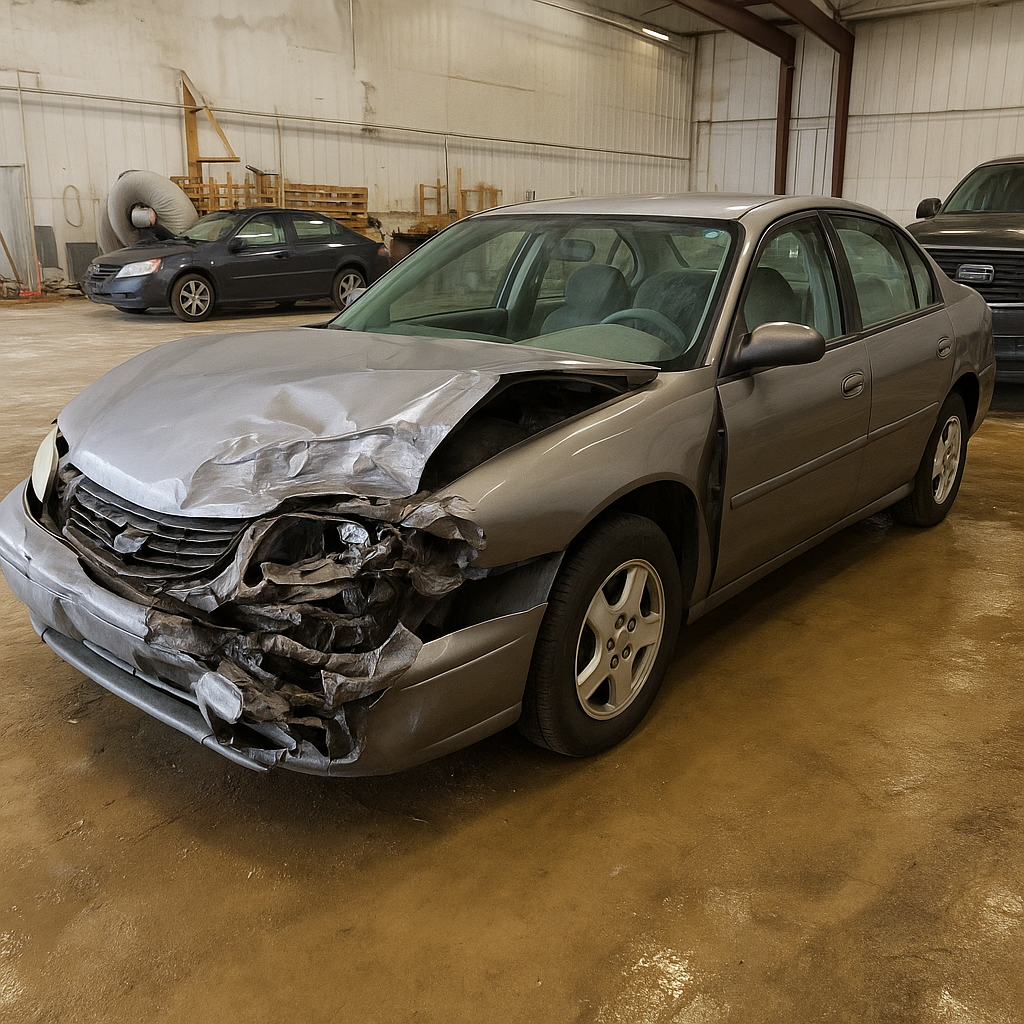
You've paid off your 2015 sedan, you're driving 6,000 miles a year instead of 15,000, and your premiums just went up again. Here's how to calculate whether you're over-insured.
The Real Question: Are You Insuring More Than You'd Lose?
Most senior drivers reach this question from one of two directions: either their premiums have climbed despite decades without a claim, or they've realized they're paying $120–$180/month to insure a vehicle worth $8,000. The standard advice — "drop full coverage when your car is paid off" — ignores the actual math that matters to drivers on fixed income.
The calculation isn't about loan status. It's about whether your annual comprehensive and collision premiums, plus your deductible, approach or exceed what you'd actually receive if your vehicle were totaled. For a 2014 Honda Accord worth $9,500, if you're paying $95/month for full coverage with a $1,000 deductible, you're spending $1,140 annually to protect $8,500 in net value after the deductible. That's a 13% cost-to-value ratio — borderline territory.
This calculation shifts dramatically for senior drivers because premiums typically rise 8–12% after age 70 in most states, even when driving patterns become safer and mileage drops. You're paying more to insure a depreciating asset, creating a compression point where coverage stops making financial sense years earlier than it would for younger drivers with stable rates. liability coverage requirements
The 10% Rule and How It Changes After 65
Insurance advisors often cite a "10% rule": drop full coverage when your annual premium exceeds 10% of your vehicle's actual cash value. For a car worth $12,000, that's $1,200 annually or $100/month. This threshold works reasonably well for drivers with stable premiums, but it doesn't account for the rate trajectory senior drivers face.
Between ages 65 and 75, full coverage premiums increase an average of 15–25% cumulatively across most states, according to data analyzed by the Insurance Information Institute. A premium that starts at $85/month at age 65 can reach $105/month by age 73 without any claims or coverage changes. Meanwhile, your 2015 vehicle has depreciated from $11,000 to $7,500. The cost-to-value ratio has nearly doubled.
A more accurate threshold for senior drivers on fixed income: drop to liability-only when annual premiums plus your deductible exceed 15% of actual cash value, or when you couldn't afford to replace the vehicle out-of-pocket regardless of insurance payout. If your car is worth $6,000 and you have $15,000 in accessible savings earmarked for vehicle replacement, you're effectively self-insuring at a better rate than any carrier will offer.
State-Specific Programs That Change the Math
Before you drop coverage, verify what your state requires and what discounts you're actually receiving. Twenty-nine states mandate insurance carriers offer mature driver course discounts, typically 5–15% off premiums for drivers who complete an approved defensive driving refresher. In some states, this discount applies to comprehensive and collision premiums specifically, which directly impacts the full-coverage calculation.
If you're paying $140/month for full coverage and qualify for a 10% mature driver discount you haven't claimed, that's $168 in annual savings — potentially enough to justify keeping comprehensive coverage for another 2–3 years on a moderating-value vehicle. The discount often renews every three years with course recertification, and some insurers now offer the course online in 4–6 hour formats.
State minimum liability requirements also matter here. If you drop to liability-only in a state requiring 25/50/25 minimums, you may be underinsured relative to your assets. Drivers with retirement accounts, home equity, or other assets exceeding $100,000 should maintain liability limits of at least 100/300/100 regardless of vehicle value, as those limits protect your assets in an at-fault accident, not your car. state-specific mature driver programs
The Medicare and Medical Payments Overlap
One coverage component that becomes redundant after 65: medical payments (MedPay) or personal injury protection (PIP) in states where it's optional. If you're paying for a $5,000 MedPay rider and you have Medicare Parts A and B, you're duplicating coverage for accident-related injuries. Medicare covers hospitalization and medical treatment regardless of how the injury occurred.
MedPay pays first and Medicare pays secondary, but for most senior drivers, the out-of-pocket maximum on a Medicare Supplement plan is lower than the annual cost of carrying MedPay. If you're paying $18/month for $5,000 in MedPay coverage ($216 annually) and your Medigap Plan G has a $226 annual deductible with no other out-of-pocket costs, the MedPay provides minimal financial benefit.
The exception: if you frequently transport passengers not covered by Medicare, MedPay covers their injuries regardless of fault. But for senior drivers primarily driving solo or with a spouse also covered by Medicare, dropping MedPay can reduce premiums by $15–$25/month without meaningful risk exposure.
When Comprehensive Makes Sense Without Collision
Full coverage is a package term, but you can separate the components. Comprehensive coverage (fire, theft, vandalism, weather, animal strikes) costs significantly less than collision and protects against risks unrelated to your driving. For many senior drivers, the smart middle path is keeping comprehensive while dropping collision.
Comprehensive-only typically costs $25–$45/month depending on vehicle value and location. If you drive a 2016 SUV worth $13,000, park it in a garage, and have a clean driving record, your collision premium might be $70/month while comprehensive is $32/month. Dropping collision saves $840 annually while maintaining protection against stolen catalytic converters, hail damage, or deer strikes — risks that don't correlate with your driving ability.
This approach works particularly well for senior drivers in states with high deer populations or elevated vehicle theft rates. If you're in a ZIP code where comprehensive claims are common but you drive fewer than 7,000 miles annually on familiar routes, you're statistically more likely to file a comprehensive claim than a collision claim. The coverage aligns with your actual risk profile. comprehensive coverage costs
Low-Mileage Programs and Usage-Based Alternatives
If you're borderline on dropping full coverage, verify whether your current insurer offers a low-mileage discount you haven't activated. Most carriers reduce premiums by 5–15% for drivers logging under 7,500 annual miles, and some offer tiered discounts starting at 10,000 miles. You may need to provide an odometer photo or agree to annual mileage verification.
Usage-based insurance programs that monitor driving through a smartphone app or plug-in device can generate 10–30% discounts for senior drivers with safe habits: minimal hard braking, no late-night driving, consistent speeds. These programs tend to reward the driving patterns typical of retired drivers who avoid rush hour and drive primarily during daylight. If a telematics discount reduces your full-coverage premium from $145/month to $110/month, you've extended the cost-effective coverage period by several years.
Some carriers now offer hybrid programs: a small base discount for enrolling (5–10%) plus additional savings based on actual monitored behavior. For senior drivers hesitant about year-round monitoring, the enrollment discount alone can justify a six-month trial, and you can typically opt out after the initial period if you're uncomfortable with ongoing tracking.
Running Your Own Numbers
Get your vehicle's actual cash value from three sources: Kelley Blue Book, Edmunds, and your most recent property tax assessment if your state bases vehicle taxes on value. Average the three figures. This is what you'd receive in a total loss, before your deductible.
Pull your current declarations page and isolate your comprehensive and collision premiums — these are the costs you're evaluating. Multiply the monthly figure by 12, then add your deductible. If that combined number exceeds 15% of your vehicle's actual cash value, or if it exceeds your readily available savings for vehicle replacement, you're over-insured.
Before making changes, request quotes for liability-only, comprehensive-only, and full coverage with higher deductibles ($1,000 or $2,500 instead of $500). A $2,500 deductible can reduce collision premiums by 25–35%, which might make keeping coverage viable for another year or two as you evaluate options. Compare those scenarios against your savings capacity and risk tolerance. There's no universal right answer — just the one that matches your specific financial situation and how you'd handle an out-of-pocket vehicle loss.