
Car Insurance Rates for Senior Drivers in Santa Ana: 65, 70, 75
Free to compare
What Senior Drivers Actually Pay in Santa Ana at 65, 70, and 75
A 65-year-old driver in Santa Ana with a clean record and 15,000 annual miles typically pays $140-$180/mo for full coverage on a mid-age sedan. That same driver at age 70 sees rates climb to $155-$200/mo, and by 75, premiums often reach $175-$240/mo — a 15-35% increase over a decade with no change in driving behavior. These increases reflect actuarial tables showing claim frequency rising modestly after age 70, not individual driving quality.
The sharpest rate acceleration happens between ages 72 and 76 across most major carriers operating in Orange County. State Farm, Farmers, and AAA typically apply their steepest age-based adjustments during this window, while GEICO and Progressive tend to spread increases more gradually across the 65-75 range. Your specific rate trajectory depends heavily on which carrier you've stayed with — loyalty often costs Santa Ana seniors $40-$80/mo compared to shopping every 2-3 years.
Santa Ana ZIP codes 92701, 92703, and 92707 see the highest senior premiums due to traffic density and uninsured motorist rates above 15%. Drivers in 92704 and 92706 typically pay 8-12% less for identical coverage. If you live near the I-5 corridor or downtown, expect quotes at the higher end of these ranges even with a perfect driving record.

California's Mature Driver Course Discount: What It's Worth in Santa Ana
California mandates that insurers offer premium reductions to drivers who complete an approved mature driver improvement course, but carriers aren't required to apply it automatically — you must request it and provide your completion certificate. The discount ranges from 5% at Mercury and Nationwide to 15% at AAA and some regional carriers, translating to $8-$27/mo for most Santa Ana seniors carrying full coverage.
AARP and AAA both offer state-approved courses available entirely online for $20-$25, completed in 4-6 hours at your own pace. The certificate arrives within 3-5 business days, and the discount applies for three years before renewal is required. If you're paying $170/mo and qualify for a 10% discount, you'll save $204 annually after a $25 course investment — a return most fixed-income budgets can justify.
The course covers California-specific traffic law updates, defensive driving techniques, and adjustments for age-related vision and reaction time changes. It's not remedial — it's continuing education that acknowledges driving conditions have changed significantly since most seniors first got their licenses. Completion also qualifies you for a DMV record point reduction if you've had a minor violation, though that benefit is separate from the insurance discount.


Low-Mileage and Retirement Discounts Most Santa Ana Seniors Miss
If you drove 18,000 miles annually during your working years but now log under 7,500 since retiring, you're likely overpaying by $30-$60/mo. Most carriers offer tiered low-mileage discounts starting at 10,000 miles annually (5-8% reduction) and increasing at 7,500 miles (10-15%) and 5,000 miles (15-20%). Metromile and Nationwide's SmartMiles program go further, charging primarily per-mile rates that can cut premiums in half for seniors driving under 5,000 miles yearly.
The challenge is that carriers don't automatically adjust your mileage profile when you retire — your policy likely still reflects your pre-retirement commute. You'll need to contact your insurer, request a mileage review, and in most cases provide an odometer photo or agree to a telematics device that verifies annual mileage. GEICO and Progressive process these adjustments within one billing cycle; State Farm and Farmers sometimes require waiting until your policy renewal.
Telematics programs like Snapshot (Progressive) and Drive Easy (GEICO) can deliver additional 10-25% discounts for senior drivers who brake smoothly, avoid late-night driving, and maintain steady speeds — all behaviors experienced drivers already practice. The smartphone app or plug-in device monitors your driving for 90 days, then locks in your discount. Santa Ana drivers who no longer navigate rush hour traffic or late-night errands typically score in the top tier, saving $25-$50/mo beyond the base low-mileage reduction.
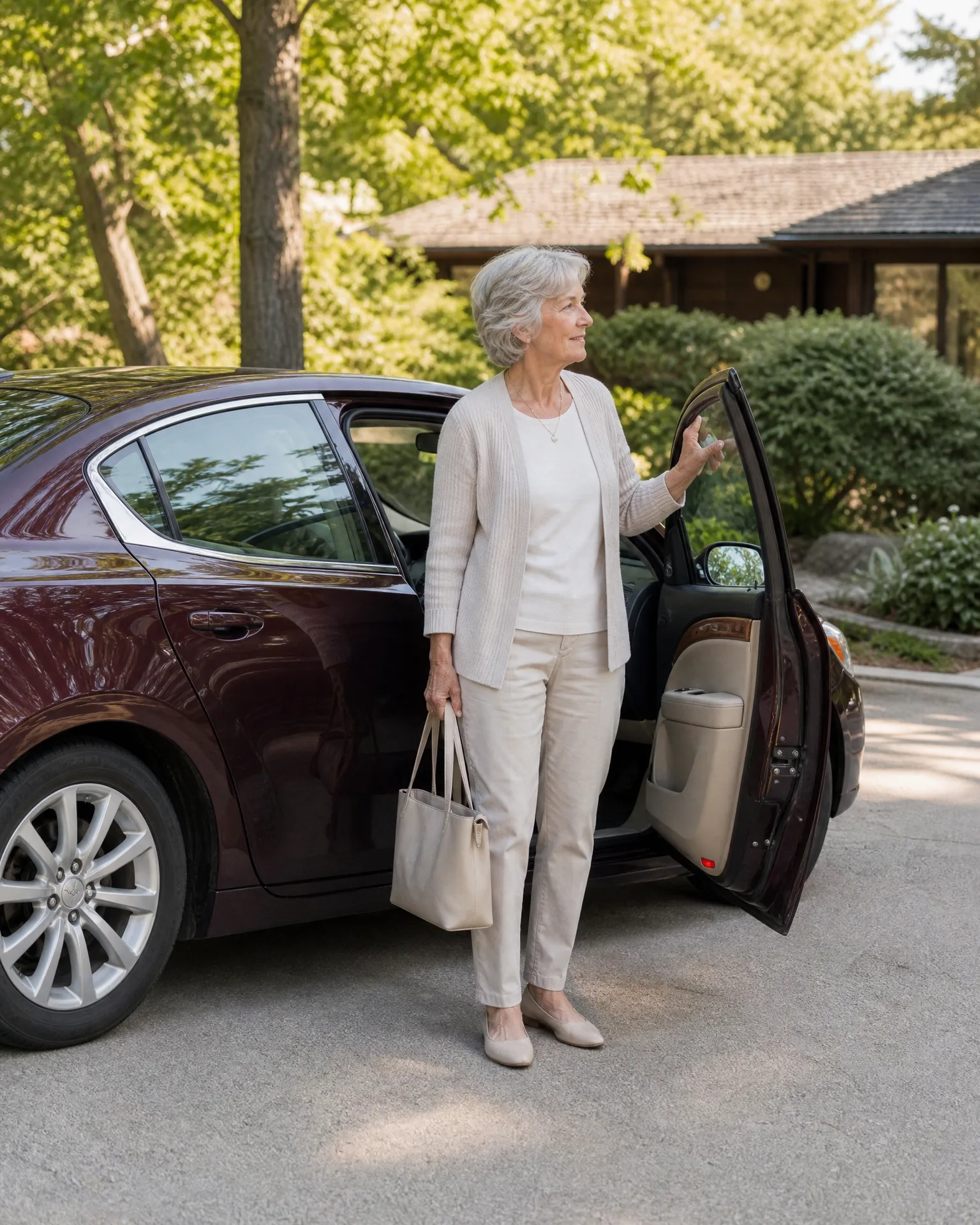
Check Today's Rates for Senior Drivers
Compare Auto Rates for SeniorsDoes Full Coverage Still Make Sense on Your Paid-Off Vehicle?
If you're driving a 2015 Honda Accord or Toyota Camry worth $8,000-$12,000 and paying $160/mo for full coverage with a $1,000 deductible, you're spending $1,920 annually to protect an asset that depreciates $800-$1,200 per year. The math shifts meaningfully once collision and comprehensive premiums exceed 15-20% of your vehicle's current value — a threshold most 8-10 year old vehicles cross in Santa Ana's rate environment.
Dropping collision coverage (which pays for damage to your car in an at-fault accident) typically reduces premiums by 35-45%, while removing comprehensive coverage (which covers theft, vandalism, weather damage) cuts another 10-15%. A senior paying $170/mo for full coverage might pay $85-$100/mo for liability-only coverage meeting California's minimum requirements plus uninsured motorist protection. Over three years, that's $2,520-$3,060 in savings versus the risk of covering a $10,000 vehicle out-of-pocket.
The decision changes if you cannot afford to replace your vehicle from savings. If a $10,000 loss would leave you without transportation and no financial cushion to purchase another car, maintaining comprehensive and collision coverage — possibly with a higher $2,000 deductible to reduce premiums — may justify the expense. Many Santa Ana seniors find a middle path: keep comprehensive (theft risk remains significant in higher-density ZIP codes) but drop collision once the vehicle passes 10 years old.

How Medicare and Medical Payments Coverage Work Together After an Accident
California doesn't require medical payments (MedPay) coverage, but it's often included automatically at $5,000-$10,000 limits on policies written before you turned 65. MedPay pays immediately for accident-related medical expenses regardless of fault, while Medicare processes claims through its standard reimbursement system with deductibles and co-pays. The two coverages coordinate: MedPay pays first, covering your Medicare Part B deductible ($240 in 2024) and the 20% co-insurance Medicare doesn't cover.
For a senior injured in an accident requiring $8,000 in emergency care, Medicare Part B would typically leave you responsible for $240 (deductible) plus $1,552 (20% of the remaining $7,760) — a total out-of-pocket cost of $1,792. A $5,000 MedPay policy covers that entire amount and pays within days, while Medicare reimbursement can take 30-60 days. This is particularly valuable for seniors on fixed incomes who cannot float four-figure medical costs while waiting for Medicare processing.
MedPay typically costs $8-$18/mo for $5,000 in coverage, or $12-$25/mo for $10,000. If you carry a Medicare Supplement (Medigap) Plan F or Plan G that already covers your Part B deductible and co-insurance, MedPay becomes redundant — you're paying for overlapping coverage. Review your Medigap policy details before your next auto insurance renewal; many Santa Ana seniors discover they're paying for medical coverage twice.

Orange County Programs and Resources for Senior Drivers
The California Department of Motor Vehicles offers a Senior Ombudsman program specifically for drivers 60+ navigating license renewal, medical review processes, or requests for restricted licenses. If you've received a reexamination notice or have concerns about an upcoming renewal, the ombudsman can explain your options and connect you with driver rehabilitation specialists before any restrictions are imposed. Contact through the Santa Ana DMV office at 1330 E. First Street.
Orange County's Council on Aging operates a Safe Mobility for Life program offering free driving assessments by occupational therapists trained in senior driver evaluation. The 90-minute assessment identifies specific areas — left turns, lane changes, blind spot checks — where targeted practice or minor vehicle modifications (extended mirrors, seat cushions for sight-line improvement) can maintain safety and potentially prevent insurance rate increases triggered by minor accidents. Assessments are available by appointment at the Santa Ana Senior Center.
AAA's CarFit program, offered periodically at Santa Ana community centers, helps seniors optimize their vehicle setup for comfort and safety — adjusting seat position, mirror angles, and headrest height for maximum visibility and airbag effectiveness. While this doesn't directly reduce insurance costs, proper vehicle fit reduces accident risk, which protects your clean driving record and prevents the 20-40% rate increase that typically follows an at-fault claim for drivers over 70.
Frequently Asked Questions
At what age do car insurance rates start increasing for senior drivers in California?
Most carriers begin applying modest rate increases around age 70-72, with more significant adjustments between ages 72-76. However, the timing and size of increases vary considerably by carrier — some apply gradual adjustments starting at 65, while others hold rates steady until 75.
Can I take the California mature driver course online if I'm over 70?
Yes, both AARP and AAA offer state-approved mature driver courses entirely online that qualify for California's mandated insurance discount. The courses take 4-6 hours, can be completed at your own pace, and provide a certificate within 3-5 business days that you submit to your insurer for a 5-15% premium reduction lasting three years.
Should I keep full coverage on my car if it's paid off and I'm retired?
If your annual collision and comprehensive premiums exceed 15-20% of your vehicle's current value, the math typically favors dropping to liability coverage plus uninsured motorist protection. For a vehicle worth $10,000, that threshold is reached when you're paying more than $125-$165/mo for full coverage, which most Santa Ana seniors exceed by age 70.
Does Medicare cover injuries from a car accident or do I need medical payments coverage?
Medicare Part B covers accident injuries but leaves you responsible for the annual deductible ($240 in 2024) plus 20% co-insurance on all covered expenses. Medical payments coverage on your auto policy pays first and immediately, covering these out-of-pocket costs that can easily reach $1,500-$2,500 for emergency care after a moderate accident.
How often should senior drivers shop for car insurance in California?
Every 2-3 years at minimum, or immediately following any major life change like retirement, vehicle payoff, or significant mileage reduction. Loyalty rarely benefits senior drivers in California's competitive market — shopping typically reveals savings of $40-$90/mo for identical coverage, particularly if you've remained with the same carrier for more than five years.
Related Articles

Nashville Senior Driver Rates: What You Pay at 65, 70, 75
4/7/2026

Colorado Car Insurance for Seniors — Rate Guide 65+
4/2/2026

Omaha Retired Driver Discounts: Claim What You're Owed
4/7/2026

Snowbird Car Insurance: Splitting Time Between 2 States
4/4/2026

Plano Senior Driver Insurance: Clean vs Accident vs Ticket
4/7/2026

Senior vs Age 50 Auto Insurance: Cost Comparison
4/7/2026