
Car Insurance Rates for Senior Drivers in Columbus: 65, 70, and 75
Free to compare
What Columbus Drivers Pay at 65, 70, and 75
A 65-year-old driver in Columbus with a clean record typically pays $95–$135 per month for full coverage on a newer sedan. That same driver at 70 sees rates rise to $110–$155 monthly — roughly 12–18% higher. By 75, monthly premiums often reach $125–$175, marking a cumulative increase of 25–35% over the decade.
These aren't gradual annual creeps. Ohio insurers apply distinct age-tier adjustments at 70 and 75, often coinciding with renewal periods when you're least expecting a jump. The increase hits even if you've had zero claims, no tickets, and drive the same vehicle. It's actuarial repositioning, not a reflection of your driving record.
The Columbus metro area adds its own layer: Franklin County has higher uninsured motorist rates than surrounding counties, which pushes base premiums up for all drivers. Urban zip codes like 43201 and 43215 run 8–12% higher than suburban Gahanna or Worthington for the same coverage profile. If you moved from the suburbs into the city after retirement, that relocation alone may account for part of your increase.
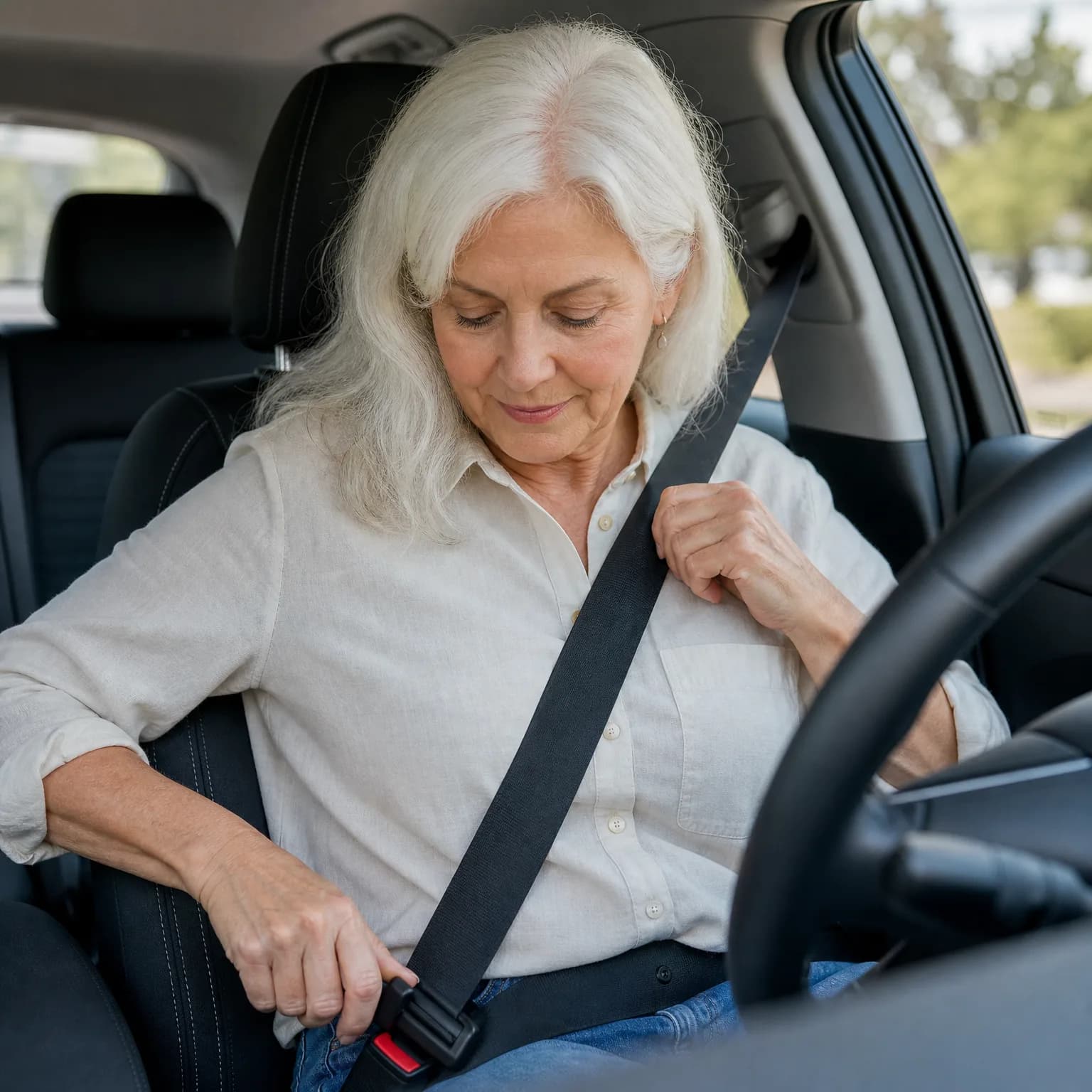
Ohio's Mature Driver Course Discount — And Why You're Probably Missing It
Ohio requires insurers to offer a mature driver course discount, but they don't have to tell you about it at every renewal, and you must re-certify every three years to keep it active. The discount ranges from 8–12% depending on your carrier, which translates to $10–$18 monthly savings on a typical Columbus policy.
AAA, AARP, and the National Safety Council all offer state-approved courses. Most are now available online, run 4–6 hours total, and cost $20–$35. You'll receive a completion certificate that you submit to your insurer. The discount typically applies within one billing cycle.
Here's the trap: if you took the course at 67 and didn't retake it at 70, your insurer quietly removed the discount at your 70th birthday renewal. That removal, combined with the age-tier adjustment, creates the sharp rate spike many Columbus drivers notice and assume is inevitable. It's not — but recovering the discount requires you to re-enroll and resubmit proof.

When Full Coverage Stops Making Sense on a Paid-Off Vehicle
If you're driving a 2015 Honda Accord worth $9,000 and paying $145 monthly for full coverage in Columbus, your annual premium is $1,740. A single comprehensive or collision claim with a $500 deductible nets you at most $8,500 — and filing that claim will likely trigger a rate increase that costs you $300–$600 over the next three years.
The math shifts once a vehicle's value drops below 10 times your annual collision and comprehensive premium. For most Columbus seniors, that threshold falls between $8,000 and $12,000 depending on the vehicle. Dropping to liability-only coverage typically cuts your premium to $55–$75 monthly, freeing up $70–$90 each month.
Before you switch, confirm you're carrying adequate liability limits. Ohio's minimum — 25/50/25 — is dangerously low if you own a home or have retirement assets. Most financial advisors recommend 100/300/100 for drivers over 65, which still costs far less than maintaining full coverage on a depreciated vehicle. You're protecting your assets from lawsuit exposure, not replacing a car you could afford to replace out of pocket.

Check Today's Rates for Senior Drivers
Compare Auto Rates for SeniorsLow-Mileage and Telematics Programs Columbus Seniors Overlook
If you're no longer commuting to Easton or downtown daily, you're likely driving 6,000–9,000 miles annually instead of the 12,000–15,000 you logged during working years. Most major insurers in Ohio now offer low-mileage discounts starting at 10,000 miles per year, with deeper cuts at 7,500 and 5,000 miles. The savings range from 5–15%, or $6–$22 monthly on a typical Columbus policy.
You'll need to verify mileage, either through an annual odometer photo or a telematics device. Some seniors resist telematics programs assuming they're invasive or punitive, but the programs have shifted: they now measure total miles, time of day, and hard braking, not speed. If you're driving short daytime trips to Kroger, the library, and church, your profile will likely qualify for an additional 10–20% discount.
State Farm's Drive Safe & Save and Progressive's Snapshot are both active in Columbus and worth requesting quotes on. The initial monitoring period runs 90 days. If your discount doesn't materialize or is minimal, you can remove the device with no penalty. But many Columbus seniors who try it see combined mileage and telematics savings of $25–$40 monthly — enough to offset most of the age-based increase they're facing.

How Medicare Interacts with Medical Payments Coverage in Ohio
Once you're on Medicare, the medical payments (MedPay) coverage you've carried for decades becomes partially redundant. Medicare Part B covers accident-related injuries regardless of fault, which is exactly what MedPay does. You're paying twice for overlapping coverage.
That said, MedPay pays immediately without deductibles, while Medicare Part B has a $240 annual deductible and 20% coinsurance. If you're in an accident in January and haven't met your Medicare deductible yet, a $5,000 MedPay policy covers your initial costs while Medicare processes claims. For Columbus seniors on fixed income, that cash flow cushion can matter.
The middle ground: reduce MedPay from $5,000 or $10,000 down to $1,000 or $2,000. You'll save $4–$10 monthly while maintaining a buffer for immediate post-accident expenses. Pair that with confirming your uninsured motorist coverage matches your liability limits — Franklin County's uninsured rate runs near 14%, and UM coverage protects you when the at-fault driver has nothing.

State-Specific Programs and Discounts Ohio Seniors Should Claim
Beyond the mature driver course, Ohio mandates that insurers offer discounts for anti-theft devices, multi-policy bundling, and passive restraint systems (standard in any car built after 2000, so you already qualify). These aren't automatically applied — you request them.
If you're an AARP member, ask specifically about affinity discounts. The Hartford, Liberty Mutual, and Nationwide all offer 5–10% cuts for AARP membership in Ohio, which stacks on top of the mature driver discount. If you're paying $130 monthly, that combination can drop you to $105–$115 without changing a single coverage limit.
Ohio also allows insurers to offer discounts for continuous coverage and claim-free years. If you've been with the same carrier for a decade with no claims, you should be seeing a longevity discount of 5–8%. If it's not listed on your declaration page, call and ask why. Many Columbus seniors discover they were coded incorrectly as new customers after a system migration or policy re-write, costing them $8–$15 monthly they were entitled to keep.
Frequently Asked Questions
Does car insurance automatically get more expensive when I turn 70 in Ohio?
Yes, most Ohio insurers apply a rate adjustment at age 70 and again at 75, typically increasing premiums 12–18% at each milestone even with no claims or violations. These are actuarial age-tier changes, not reflections of your individual driving record. The mature driver course discount can offset most or all of this increase if you enroll and re-certify every three years.
How much does the Ohio mature driver course discount actually save me?
Ohio's mandatory mature driver discount ranges from 8–12% depending on your insurer, saving most Columbus drivers $10–$18 monthly. The course costs $20–$35, is available online, and takes 4–6 hours total. You must recertify every three years to keep the discount active — many seniors lose it at renewal without realizing it expired.
Should I drop full coverage on my paid-off 2014 car in Columbus?
If your vehicle is worth less than 10 times your annual collision and comprehensive premium, switching to liability-only usually makes financial sense. A 2014 sedan worth $8,000 with $1,200 annual comp/collision costs means you'd recover your premium in a claim only if the car is totaled — and that claim would likely raise your rates for three years. Dropping to liability-only typically cuts premiums from $130–$145 to $55–$75 monthly.
Do I still need medical payments coverage if I'm on Medicare?
Medicare Part B already covers accident-related injuries, making high MedPay limits redundant. However, MedPay pays immediately without deductibles, while Medicare has a $240 deductible and 20% coinsurance. Most Columbus seniors reduce MedPay to $1,000–$2,000 for cash flow coverage rather than eliminating it entirely, saving $4–$10 monthly while keeping a buffer for immediate post-accident expenses.
Can I get a low-mileage discount if I only drive 7,000 miles a year now that I'm retired?
Yes, most major insurers in Ohio offer low-mileage discounts starting at 10,000 miles annually, with deeper cuts at 7,500 and 5,000 miles. The discount ranges from 5–15%, or about $6–$22 monthly for typical Columbus policies. You'll verify mileage through odometer photos or a telematics device, and many seniors qualify for additional telematics discounts of 10–20% if they drive primarily short daytime trips.
Related Articles

Nashville Senior Driver Rates: What You Pay at 65, 70, 75
4/7/2026

Colorado Car Insurance for Seniors — Rate Guide 65+
4/2/2026

Omaha Retired Driver Discounts: Claim What You're Owed
4/7/2026

Snowbird Car Insurance: Splitting Time Between 2 States
4/4/2026

Plano Senior Driver Insurance: Clean vs Accident vs Ticket
4/7/2026

Senior vs Age 50 Auto Insurance: Cost Comparison
4/7/2026